 mfaisalbuttceo@gmail.com
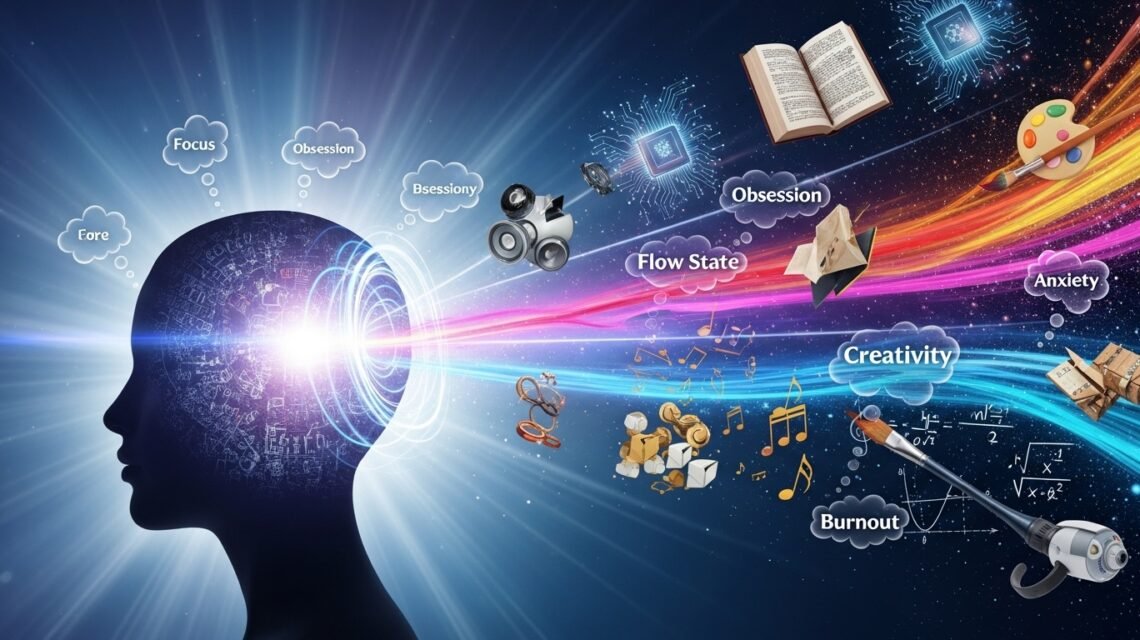
 In our modern, notification-driven world, the ability to focus is often treated as a superpower. We are constantly bombarded by pings, buzzes, and red badges, all vying for a slice of our limited attention. However, there is a specific type of focus that goes beyond mere concentration—a state where the world falls away, time loses its meaning, and a single task or interest becomes the entire universe. This is known as hyperfiksaatio, and while it is often associated with neurodiversity, it offers profound insights into how the human brain processes passion and information.
What is Hyperfixation?
Unlike a simple hobby, hyperfixation is an intense, all-consuming immersion in a specific topic, activity, or idea. For some, it might be a sudden obsession with a historical era; for others, it’s the relentless need to master a new coding language or finish a complex puzzle in one sitting.
While it shares DNA with the concept of “Flow”—the psychological state of being “in the zone”—hyperfixation is typically more intense and harder to “switch off.” It isn’t just about being productive; it’s about a dopamine-driven deep dive that can last for hours, days, or even months.
The Double-Edged Sword of Deep Focus
For those who experience this state regularly, it is often a double-edged sword. On one hand, it allows for a level of skill acquisition and problem-solving that most people struggle to achieve. When a person is hyperfixated, they can process vast amounts of data and connect dots that others might miss.
On the other hand, the “all-or-nothing” nature of this focus can lead to neglecting physical needs—forgetting to eat, sleep, or socialize. The challenge lies in balancing intense passion with daily responsibilities, a skill that requires both self-awareness and external structure.
Why Does It Happen?
Neurologically, hyperfixation is often linked to the way the brain regulates dopamine. In many neurodivergent individuals, such as those with ADHD or Autism, the brain “hunts” for dopamine. When it finds a stimulating task, it latches on, refusing to let go until the curiosity is satisfied or the dopamine source dries up.
However, in the age of the “Attention Economy,” more people are reporting similar experiences. Our brains are being rewired by algorithms designed to keep us engaged. While an algorithm-induced rabbit hole isn’t exactly the same as clinical hyperfixation, the result is the same: a total loss of time and a singular focus on a digital stream.
Harnessing the Power of the “Deep Dive”
If you find yourself prone to these intense periods of interest, the goal shouldn’t be to suppress them, but to manage them. Here are three ways to turn hyperfixation into a constructive force:
- The Time-Box Method: Instead of letting an obsession run wild, give it a dedicated “sandbox.” Allow yourself two hours of uninterrupted deep-diving, but set a physical alarm in another room to force a break.
- Externalize Your Logic: Because hyperfixation happens mostly inside the head, it’s easy to lose perspective. Use journals or mind-mapping tools to bring your thoughts into the physical world. This helps in “saving your progress” so you don’t feel the frantic need to finish everything at once.
- Bridge the Gap: Try to find a “utility bridge” between your current fixation and your long-term goals. If you are obsessed with a specific video game, can you learn about its engine, its narrative structure, or the community management behind it?
The Path to Productive Passion
As we move toward a future where “general knowledge” is easily replaced by AI, the human ability to go deep—to become an expert in a niche through sheer obsessive interest—is becoming more valuable. The key is to ensure that your focus is a tool you use, rather than a master you serve.
By understanding the mechanics of hyperfiksaatio and respecting the brain’s need for intense engagement, we can move away from the guilt of “wasting time” and toward a more nuanced appreciation of how we learn and grow. Whether it’s a temporary spark or a lifelong pursuit, these deep dives are often where our most creative and innovative ideas are born.

