 mfaisalbuttceo@gmail.com
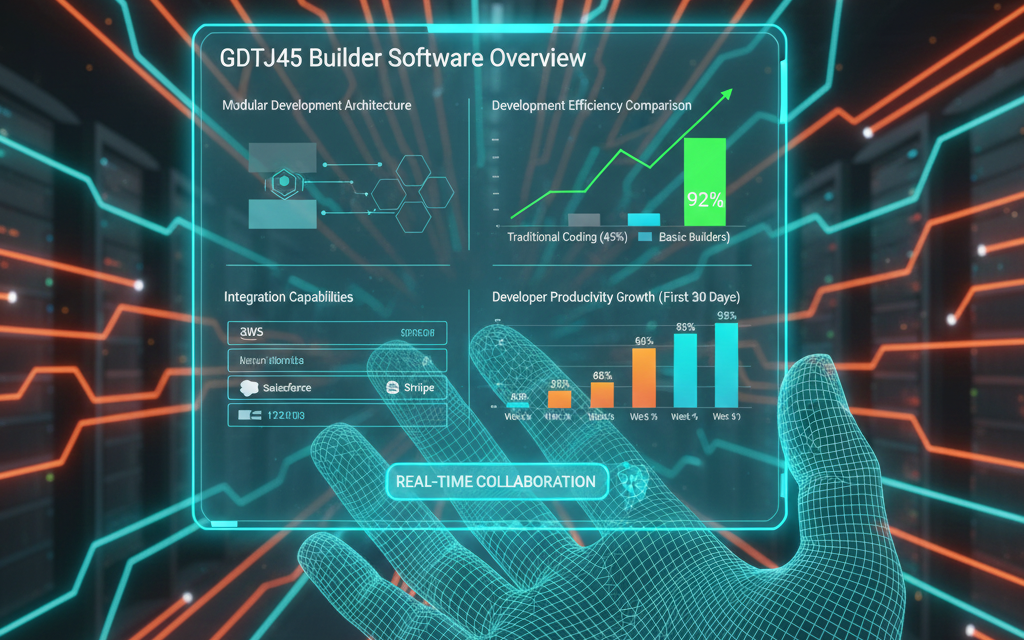
 In the rapid-fire world of digital transformation, the pressure to “build fast and break things” has never been higher. To keep up with market demands, many enterprises have turned to rapid application development (RAD) tools and automated builders to streamline their workflows. However, as any seasoned developer will tell you, speed often comes with a hidden tax. When dealing with specific environments, such as software gdtj45 builder problems, the shift from “seamless integration” to “technical bottleneck” can happen overnight.
Understanding these challenges is the first step toward building a resilient digital infrastructure that doesn’t collapse under its own weight.
The Paradox of Automated Builders
The promise of modern software builders is simple: democratize development. By providing a framework that handles the heavy lifting of backend logic and UI rendering, these tools allow non-technical stakeholders to contribute to the product roadmap. But this abstraction layer is where the trouble begins.
When a builder encounters a specific error—often colloquially referred to in dev circles as “gdtj45” style issues—it usually points to a mismatch between the builder’s standardized output and the custom requirements of the host environment. These problems typically manifest as:
- Dependency Hells: Where the builder requires a specific version of a library that conflicts with the rest of the stack.
- Performance Bloat: Automated builders often “over-pack” scripts to ensure compatibility, leading to sluggish load times.
- Lack of Granular Control: When a bug occurs within the builder’s proprietary code, the developer is often locked out of the “black box,” unable to apply a manual patch.
Navigating Technical Debt in 2026
Every line of code written—or generated—is a liability until it is proven stable. The rise of AI-assisted coding and automated builders has inadvertently accelerated the accumulation of technical debt. We are seeing a trend where applications are launched in record time, only to require a total refactor six months later because the original builder couldn’t scale with the user base.
To mitigate this, teams must adopt a “Modular First” philosophy. Instead of relying on a single builder to handle the entire application, developers are breaking projects into micro-services. If one builder encounters a “gdtj45” error or a logic conflict, it only affects a small portion of the ecosystem rather than crashing the entire platform.
Proactive Troubleshooting Strategies
If your team is currently battling software gdtj45 builder problems or similar integration hurdles, a systematic approach to debugging is essential.
- Isolation Testing: Strip the application back to its barest bones. Does the builder function in a “vanilla” environment? If so, the conflict lies in your third-party integrations or CSS overrides.
- Log Verbosity: Many builders have “silent” errors. Increasing the verbosity of your error logs can reveal the specific hook or API call that is triggering the failure.
- The “Human-in-the-Loop” Review: Never push builder-generated code directly to production without a manual audit. A ten-minute code review can save ten hours of emergency patching later.
The Future of Development: Resilience over Speed
As we look toward the latter half of the decade, the industry is shifting away from “no-code” and moving toward “low-code with high-extensibility.” The most successful software builders of the future will be those that allow developers to “eject” from the automated framework and write custom scripts when they hit a wall.
The “gdtj45” era of software problems has taught us a valuable lesson: tools should empower developers, not replace their intuition. By maintaining a healthy skepticism of “one-click” solutions and prioritizing clean, scalable architecture, businesses can ensure that their software remains an asset rather than a troubleshooting nightmare.
Conclusion
Building software in a high-stakes environment is a balancing act. While builders and RAD tools are indispensable for modern business, they are not a substitute for sound engineering principles. By identifying software gdtj45 builder problems early and implementing robust testing protocols, you can harness the speed of automation without sacrificing the stability of your final product.
In the end, the best software isn’t the one that was built the fastest—it’s the one that stays standing when the traffic spikes.


 Streemaus Software Features for Modern Video Streaming
  Argonian Name Generator for Fantasy Game Characters
  The Rule Company and Smart Software Features
  Messeregge Software Features That Improve Digital Workflows
  Understanding woeken in Modern Software Features
  The Invisible Fortress: Why Digital Resilience is the New Competitive Edge